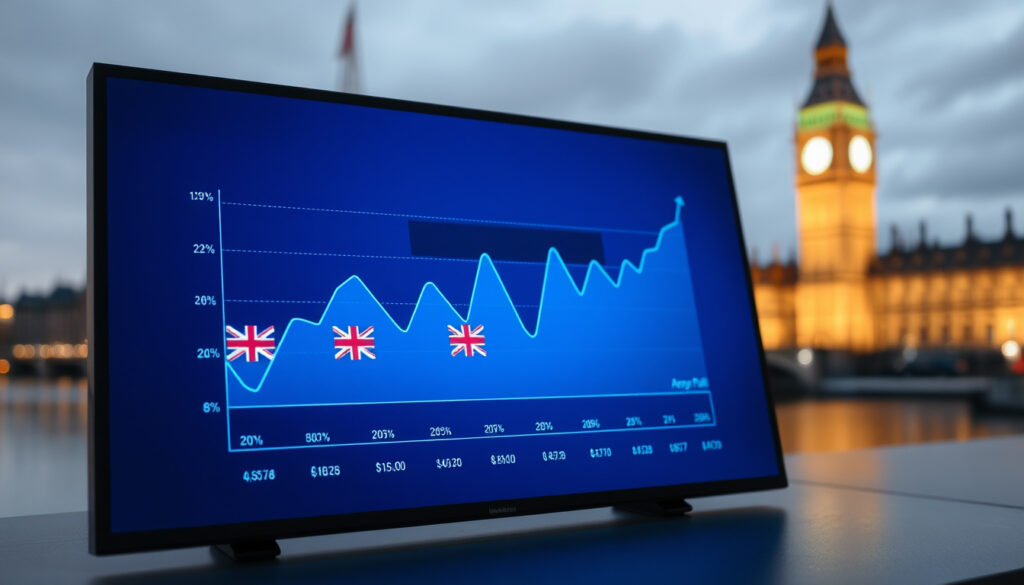
Keir Starmer Approval Rating – Latest Polls and Trends
What is Keir Starmer’s Current Approval Rating?
Keir Starmer’s approval ratings have experienced significant turbulence since taking office as Prime Minister in July 2024. Multiple polling organisations show a consistent pattern of decline, with the current figures representing some of the lowest net approval scores recorded for a sitting Prime Minister in recent British political history.
As of late 2024 and tracking into 2025-2026, YouGov’s ongoing tracker places Starmer at 19% favourable against 61% unfavourable, yielding a net favourability of -42%. This positions him as the 9th most popular Labour politician and 21st among all UK Prime Ministers tracked by the pollster. The Ipsos tracker from 13-17 December 2024 recorded a 32% approval rating for his performance as Prime Minister.
PollCheck’s 2025 tracking, using a seven-point moving average, shows Starmer’s net approval at approximately -15%, compared favourably only to Kemi Badenoch’s -25% in some metrics but significantly lagging behind Nigel Farage’s +5% net approval during the same period.
Latest Poll Results Snapshot
Recent polling data from multiple organisations paints a consistent picture of depressed approval figures:
- YouGov (November 2024): 27% approval as Prime Minister
- Survation (12-16 December 2024): 35% approval
- More in Common (6-10 December 2024): 28% believe he is doing a “good job”
- Ipsos (December 2024): 32% approval
- PollCheck 2025 average: Net -15% approval
| Pollster | Date | Approve % | Disapprove % | Net % | Sample Notes |
|---|---|---|---|---|---|
| YouGov | Nov 2024 | 27 | — | — | Ongoing tracker |
| Survation | Dec 12-16, 2024 | 35 | — | — | PM approval |
| More in Common | Dec 6-10, 2024 | 28 | — | — | “Good job” measure |
| Ipsos | Dec 13-17, 2024 | 32 | — | — | PM performance |
| PollCheck | 2025 Average | — | — | -15 | 7-pt moving average |
| YouGov (Favourability) | 2025-2026 | 19 | 61 | -42 | Net favourability |
How Has Keir Starmer’s Approval Rating Changed Over Time?
Starmer’s polling trajectory follows a recognisable political pattern: a post-election “honeymoon” period that proved short-lived, followed by a sustained and significant decline that has continued into 2025 and early 2026. Understanding this trajectory requires examining the key inflection points in his polling history.
Pre-Election and Election Period (July 2024)
Prior to the July 2024 general election, Starmer’s net favourability stood at -18% according to YouGov data. This represented his lowest point in the pre-election period, reflecting the challenging political environment facing the Labour Party at that time. The immediate aftermath of the election brought a dramatic reversal, with YouGov recording a net favourability of 0 between 5-8 July 2024—his highest point since taking the Labour leadership. This 18-point swing demonstrated the public’s willingness to give a newly elected Prime Minister the benefit of the doubt.
Mid-2024 Decline
By late July 2024, the honeymoon period had already begun to fade. YouGov data shows Starmer’s net favourability dropped to -9%, with favourable ratings at 40% compared to 49% unfavourable. The decline, though modest by historical standards, signalled the beginning of a sustained downward trend. At this stage, the drop was attributed to early governance challenges, including the Southport stabbings and subsequent riots, disorder in Leeds, and internal Labour Party tensions over the two-child benefit cap.
Autumn and Winter 2024
The autumn and winter months of 2024 saw continued erosion. By November and December, gross approval figures ranged from 27% to 35% across different pollsters, translating to net approval figures estimated between -10% and -15%. The public’s patience with early governance challenges was wearing thin, and specific policy controversies began to register more sharply in the polling data.
2025-2026: Sustained Lows
PollCheck’s 2025 tracking data shows Starmer’s net approval stabilising around -15%, while YouGov’s favourability tracker reports a particularly stark -42% net figure. Notably, 50% of respondents in some polls indicate a preference for his replacement as party leader, compared to only 24% who wish him to remain. Even among those who voted Labour in 2024, support for his continued leadership has narrowed to a slim majority.
Detailed polling data becomes less granular from mid-2025 onwards, with the most recent comprehensive figures available from December 2024 polls. The Times maintains a visual tracker showing the broader trajectory of decline, though specific monthly breakdowns for 2025-2026 remain partially incomplete in publicly available sources.
Why Has Keir Starmer’s Approval Rating Declined?
Multiple factors have contributed to the sustained decline in Starmer’s approval ratings. While polling organisations do not typically attribute causation directly, temporal analysis of the data reveals clear correlations between specific events and subsequent polling movements.
Early Crises and Governance Challenges (July 2024)
The summer of 2024 brought a cluster of challenges that tested the new government’s early response capability. The Southport stabbings and subsequent riots, combined with disorder in Leeds, created an immediate crisis environment. Simultaneously, a rebellion within Labour’s own ranks over the two-child benefit cap, and the revelation of a £22bn public finance shortfall requiring significant cuts, further complicated the government’s narrative. YouGov data indicates that Starmer’s favourable ratings among Labour voters dropped 8 points to 79% during this period.
Cabinet Colleague Impact
Research suggests a phenomenon known as “cabinet drag,” where the ratings of senior ministers contribute to or detract from the Prime Minister’s overall standing. Chancellor Rachel Reeves saw her unfavourable ratings rise 12 points to 37% following post-budget cuts. Home Secretary Yvette Cooper experienced a 6-point increase to 32% unfavourable, while Foreign Secretary David Lammy and Deputy Prime Minister Angela Rayner also showed elevated unfavourable readings. The collective impact of these colleagues’ ratings appears to have compounded the pressure on Starmer’s personal numbers.
Policy Controversies
Specific policy initiatives have attracted criticism that appears to have affected public perception. Proposals around digital identity verification generated concern among some segments of the electorate, though notably one YouGov test found no net harm to ratings from this specific issue. Broader concerns about the direction of economic policy, public spending constraints, and the government’s overall approach to governance have featured prominently in qualitative research accompanying the quantitative polling data.
Labour Party Dynamics
Analysis from polling aggregators suggests that Starmer’s struggles are partially linked to broader Labour Party difficulties rather than purely personal factors. While this distinction is difficult to isolate definitively, the data shows that even within Labour’s own voter coalition, enthusiasm for his leadership has waned considerably. Among 2024 Labour voters, approximately 40% express support for his continuation as leader or Prime Minister, while 37% indicate a preference for an alternative candidate.
How Does Keir Starmer’s Approval Rating Compare to Previous PMs?
Historical comparison provides crucial context for understanding the current state of Starmer’s polling. While direct comparisons must account for different methodological approaches and political contexts, the data reveals some striking findings.
Positioning Against Rishi Sunak
Comparisons to Starmer’s immediate predecessor, Rishi Sunak, present a mixed picture. Sunak’s own polling during his tenure included particularly low periods, and Starmer’s post-election gains initially appeared to represent a significant improvement. However, by late 2024 and into 2025-2026, Starmer’s numbers have deteriorated to the point where he now polls worse than Sunak did at comparable points in their respective terms in some key metrics.
Comparisons to Liz Truss
Analysis from polling aggregators indicates that Starmer’s current ratings have fallen below those of Liz Truss in certain comparative assessments. While Truss’s tenure was notably turbulent, this comparison underscores the severity of Starmer’s current polling position relative to the broader historical record of Prime Minister approval ratings.
Comparison to Political Rivals
When compared to contemporary political figures, Starmer’s ratings show particular weakness. Conservative politician Kemi Badenoch registers net figures ranging from -25% to +6% in various polls, sometimes outperforming Starmer despite being in opposition. Nigel Farage, in some tracking measures, shows a positive net approval of +5%, considerably ahead of Starmer’s sustained negatives. This comparison to both successors within the Conservative Party and to a prominent challenger illustrates the depth of Starmer’s polling challenges.
The historical comparison of approval ratings requires careful interpretation. Different pollsters use varying methodologies, sample compositions, and question wordings, which can produce divergent results. Additionally, political contexts, economic conditions, and media environments evolve, making direct comparisons across different time periods inherently approximate rather than precise.
Timeline of Key Rating Milestones
Understanding when and how Starmer’s ratings changed helps contextualise the broader trajectory:
- Early July 2024 (pre-election): Net favourability at -18%, representing the lowest pre-election point according to YouGov tracking
- July 5-8, 2024 (immediate post-election): Net favourability peaks at 0, with 44% favourable—his highest polling point as Prime Minister
- Late July 2024: First significant decline to net -9%, influenced by early governance challenges and internal party tensions
- Autumn 2024: Continued erosion with approval figures dropping into the high 20s to low 30s across pollsters
- November-December 2024: Gross approval ranging from 27% to 35%, net approval estimated between -10% and -15%
- 2025-2026: Sustained lows with PollCheck averaging approximately -15% net approval and YouGov showing -42% net favourability
What is Established Versus Unclear in Current Data?
| Established Information | Information Requiring Additional Verification |
|---|---|
| YouGov net favourability at -42% (19% favourable, 61% unfavourable) | Precise monthly breakdown for 2025-2026 period |
| PollCheck 7-point moving average at -15% net approval | Causation between specific policies and rating changes |
| Post-election peak at net 0, followed by sustained decline | Full demographic breakdowns for 2025-2026 data |
| December 2024 approval figures ranging from 27% to 35% | Complete regional or age-group specific trends |
| Preference for replacement over continuation as leader (50% vs 24%) | Detailed impact of specific cabinet ministers on PM ratings |
| Comparison to Sunak showing similar or worse metrics at comparable tenure points | Projected trajectory without significant political event intervention |
Understanding Approval Rating Methodology
Different polling organisations employ varying methodologies when measuring Prime Minister approval, which contributes to the range of figures reported. YouGov uses a favourability approach, asking respondents whether they have a favourable or unfavourable view of the individual. Ipsos and other pollsters typically use direct approval/disapproval questions about job performance. PollCheck aggregates multiple polls to create moving averages, which can smooth out individual pollster anomalies but may lag behind the most recent changes.
Sample sizes, weighting methodologies, and question wording all influence results, meaning that no single poll should be viewed in isolation. The direction of travel is more reliably assessed through consistent tracking over time rather than through any individual data point.
Sources and Data Attribution
This analysis draws on multiple polling sources to construct a comprehensive picture of Keir Starmer’s approval ratings. YouGov provides the most consistent long-term tracking data, including the favourability figures that allow historical comparison. PollCheck offers aggregated moving averages that help contextualise individual pollster results. Wikipedia’s compilation of leadership approval opinion polling provides a useful centralised reference for multiple pollster results. The Week in Polls Substack offers analytical commentary that contextualises the data within broader political trends.
Methodology notes from each polling organisation are available on their respective websites, detailing sample composition, weighting approaches, and confidence intervals that should be considered when interpreting the figures presented here.
Summary
Keir Starmer’s approval ratings have undergone a significant transformation since the July 2024 general election. From a post-election peak of net 0 favourability, his ratings have deteriorated to levels that place him among the lowest-performing Prime Ministers in recent British political history. Current figures from YouGov show a net favourability of -42%, while PollCheck’s aggregated tracking indicates a net approval of approximately -15%. The decline appears linked to a combination of early governance challenges, specific policy controversies, and broader Labour Party dynamics. When compared to predecessors including Rishi Sunak and Liz Truss, and to contemporary rivals such as Kemi Badenoch, Starmer’s ratings show particular weakness. The trajectory, while established with reasonable confidence for the 2024 period, has less granular data available for the 2025-2026 period, though the overall direction of decline is consistently indicated across multiple tracking sources.
For those interested in related government policies and their eligibility criteria, the DWP Winter Fuel Payment – Who Qualifies in 2024/25 guide provides detailed information on winter fuel payment provisions.
What factors influence Prime Minister approval ratings?
Approval ratings are influenced by economic conditions, government policy decisions, media coverage, leadership perception, and broader political context. Major events, crises, and policy successes or failures can cause significant short-term movements.
How are approval ratings calculated?
Pollsters typically ask respondents whether they approve or disapprove of a leader’s performance, or about their favourable/unfavourable view. Results are weighted to match demographic profiles of the voting population, with margins of error typically around ±3%.
How often is polling data published?
Major polling organisations conduct weekly to monthly tracking surveys. YouGov maintains ongoing trackers, while Ipsos and others publish periodic updates. The frequency varies by organisation and current political circumstances.
Why do different pollsters show different numbers?
Methodological differences in question wording, sample composition, weighting approaches, and timing of polls all contribute to variation. No single poll provides a definitive picture; trends across multiple pollsters offer more reliable insights.
Has Starmer’s decline been faster than previous Prime Ministers?
Based on available data, Starmer’s decline from his post-election peak to current lows occurred relatively quickly, though precise historical comparisons require accounting for different political contexts and methodologies across different periods.
What is the difference between net approval and net favourability?
Net approval typically measures the difference between those approving and disapproving of job performance. Net favourability measures the difference between those viewing someone favourably versus unfavourably. Both can indicate public sentiment but may yield different figures due to question framing.
How reliable are current ratings for predicting future electoral outcomes?
Approval ratings provide a snapshot of current sentiment but are imperfect predictors of electoral results. Many factors between any given point and an election can influence both ratings and outcomes. Historical relationships between polling and results vary considerably.
More related posts
 Chancellor of the Exchequer – UK’s Chief Finance Minister
 1.66 m Height in Feet – Exact Conversion and Inches Guide
 Portman Park Results Today – Latest Winners and Race Times
 SUV Car for Sale – Find the Be t Deal Today
 Is Karen Carney Gay – Verified Facts on Her Personal Life
 Pound to Taka Rate Today – Live GBP to BDT Rate & Transfer Tips
 Can I Claim Carer’s Allowance For Myself – UK Rules Rates Eligibility
